August 11, 2026 · Aboard Scarlet Lady
How Do You Photograph a Total Solar Eclipse From a Moving Cruise Ship?
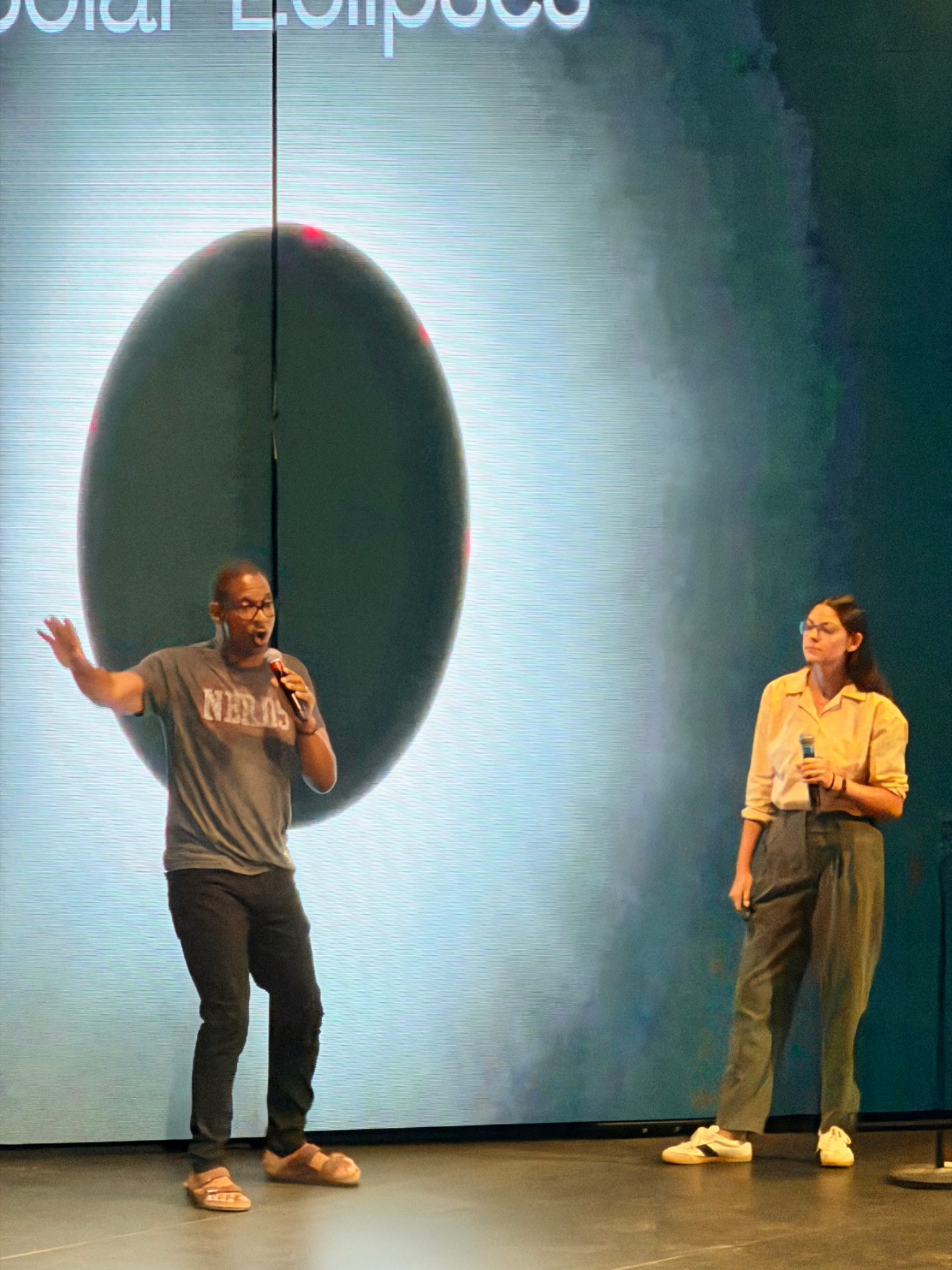
Photographing a total solar eclipse from a moving cruise ship means adapting the standard rules of eclipse photography, especially exposure time, to a platform that moves roughly 10 times faster than Earth rotates. On August 10, 2026, I sat in on Scarlet Lady's onboard photography briefing, part of Virgin Voyages' own expert programming for the August 12 total solar eclipse sailing from Barcelona to Rome, and this article is built directly from the notes I took in that room.
Key takeaways
- Eye safety comes before any camera setting: keep eclipse glasses on until the sky is fully dark, since the sun stops hurting to look at well before it's actually safe.
- The standard 500 rule for exposure time does not hold on a ship; even gimbal-stabilized shots max out near 1/20s because ship motion is roughly 10 times faster than Earth's rotation.
- The best onboard viewing spot for this sailing is the stern, looking slightly north, with totality starting roughly 1.5 hours after partial phases begin around 7pm.
What Is the Most Important Eclipse Photography Rule From Virgin Voyages' Onboard Briefing?
The most important rule has nothing to do with a camera at all: watch totality with your own eyes first, not through a screen. According to the presenter at Scarlet Lady's August 10, 2026 briefing, the recommended move is to set your phone down on the ground, recording, pointed up, so it captures both the sky and your own reaction while your eyes stay on totality itself.
This was the opening point of the seminar, and it's the one I keep returning to. It's easy to spend an entire eclipse looking at a viewfinder instead of the sky. The briefing framed the phone-on-the-ground technique as a way to get a documented reaction shot without sacrificing the roughly 70 seconds of totality you actually get to see with your own eyes.
Why Does Eye Safety Override Every Camera Setting?
Eye safety overrides every camera setting because your body's pain response cannot be trusted during an eclipse. The presenter's exact framing, which I wrote down word for word, was that the sun stops hurting to look at well before it's actually safe, so a brief glance during the partial phases can leave spots that outlast totality itself.
Keep eclipse glasses on until the sky is fully dark. That's the rule, stated plainly. It's not a suggestion layered on top of the photography advice; it's the condition everything else depends on. And it's not only human eyes: camera sensors need protection too. A Mylar solar filter goes on the lens and comes off only about a minute before totality begins.
The 70-Second Window
Totality on this sailing lasts roughly 70 seconds. Every technique in this briefing, from the phone-on-the-ground trick to the exposure bracket on a professional rig, is built around not wasting a second of that window on the wrong settings or the wrong glance.
How Should You Set Up a Smartphone to Photograph the Eclipse?
For smartphones, the briefing recommended starting in night mode for automatic exposure, then manually pulling the exposure down by tapping the center of the frame and swiping the sun icon down. This keeps the pink chromosphere prominences from blowing out, which is the detail most phone shots miss.
On zoom: use native zoom only, at 2x, 4x, or 8x. Pinch zoom is just a digital crop and doesn't add real detail. The briefing also drew a distinction between framing choices: wide shots benefit from a longer exposure to catch the faint outer corona, while zoomed-in shots want lower exposure to resolve fine detail in the corona itself.
Wide vs. Zoomed Framing
If you're shooting wide to capture the full corona glow around the eclipsed sun, lean toward a longer exposure. If you're zoomed in tight on the sun's edge, pull exposure down so detail doesn't wash out. According to the presenter, these are two different jobs, and trying to do both with one setting is where most eclipse phone photos fall short.
Why Doesn't the Standard 500 Rule Work on a Cruise Ship?
The 500 rule, a standard photography guideline for maximum exposure time before motion blur sets in, doesn't hold on a moving ship because the ship's motion runs roughly 10 times faster than Earth's rotation. That single fact reshapes every other setting in the briefing.
Even with a gimbal-stabilized rig, exposure time tops out near 1/20s on this sailing. The workaround the presenter used: push ISO higher and lean on AI noise reduction in post-processing to compensate for the shorter exposure window. It's a direct trade-off, shorter exposure for stability, higher ISO to keep the image usable.
What Camera Gear Did the Presenter Use, and What Can You Learn From It?
The presenter's own rig at the briefing was a Canon R5 paired with 85mm, 400mm, and 500mm lenses, running a 7-shot exposure bracket from 1/8000s to 1/20s, fired with an intervalometer. That bracket range spans everything from a fast exposure for the bright partial phases down to the slower 1/20s ceiling the ship's motion imposes during totality.
An intervalometer matters here because it fires the bracket automatically, which means you're not fumbling with settings during the 70 seconds that matter most. According to Nicci Grotefendt, a certified Virgin Voyages travel advisor who attended this briefing in person, the gear setup was less about having the most expensive camera and more about having a repeatable, hands-off sequence for a window that doesn't repeat.
Where and When Should You Watch Totality From Scarlet Lady?
The best viewing spot on Scarlet Lady for this eclipse is the stern, looking slightly north, with totality beginning roughly 1.5 hours after the partial phases start around 7pm. That timing and positioning came directly from the ship's own onboard briefing, not a general guide written for a fixed location on land.
A moving ship changes more than exposure settings; it changes where you stand. The stern position, angled slightly north, was the specific recommendation given to guests on this sailing for the clearest sightline as totality approaches.
Why Trust This Account?
This article comes directly from notes taken inside the room. I'm Nicci Grotefendt, a certified Virgin Voyages travel advisor (First Mate tier) with 15+ years in hospitality and travel, and I attended this photography briefing in person aboard Scarlet Lady on August 10, 2026, two days before the August 12 total solar eclipse, as part of the full 12-night Barcelona to Rome sailing I'm documenting in real time. I'm not writing about a ship I haven't boarded or a seminar I haven't sat through.
FAQ
Is it safe to photograph the eclipse with my phone the whole time? No. Keep eclipse glasses on until the sky is fully dark, since the sun stops hurting to look at well before it's actually safe, and use your eyes for totality itself rather than watching only through your phone screen.
Do I need special camera gear to photograph this eclipse from the ship? No. The briefing covered both smartphone technique (night mode, manual exposure, native zoom) and a professional setup (Canon R5, multiple lenses, exposure bracket), so the guidance scales from a phone in your pocket to a dedicated rig.
Why can't I just use my phone's pinch zoom for eclipse photos? Pinch zoom is a digital crop, not true zoom, so image quality drops. The briefing recommended native zoom only, at 2x, 4x, or 8x, to preserve detail in the corona and prominences.
Common Questions
Sail the same Barcelona to Rome eclipse voyage aboard Scarlet Lady.
View Pricing & Book← Back to the Journal